Advanced Digital Record Authentication Grid – 2566995274, 2568674634, 2629487300, 2672935009, 2675260370, 2677030033, 2678173961, 2678656550, 2678656582, 2679453765

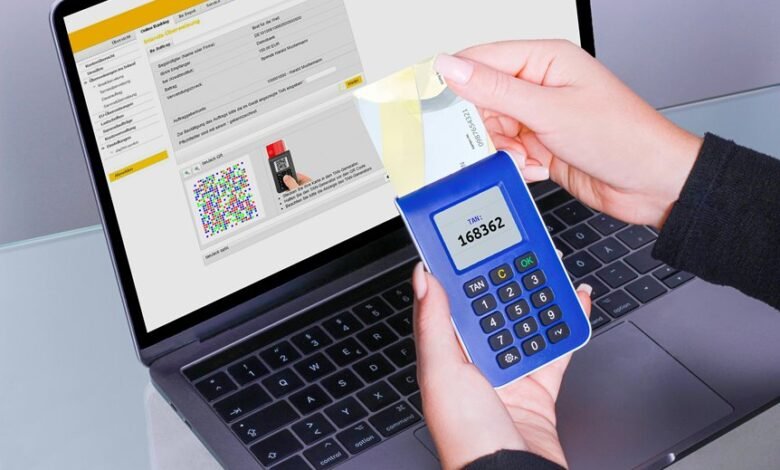
The Advanced Digital Record Authentication Grid (ADRAG) concept integrates structured provenance, cross-border verification, and privacy-preserving integrity checks for a defined set of identifiers. Its framework promises real-time validation, interoperable governance, and auditable control while maintaining confidentiality through cryptographic proofs. Early evidence suggests reproducible audits and resilient archival practices across sectors. Yet critical questions remain about implementation logistics, performance under load, and governance trade-offs, inviting further examination of practical pathways and evaluative criteria to determine impact at scale.
What Is the Advanced Digital Record Authentication Grid?
The Advanced Digital Record Authentication Grid (ADRAG) is a structured framework designed to verify the integrity and provenance of digital records across multi-party ecosystems.
It presents a formalized schema for data integrity, cross border verification, privacy safeguards, interoperability, audit trails, and governance models.


The approach emphasizes traceable provenance, reproducible results, and transparent evaluation criteria within flexible, rights-respecting information ecosystems.
How It Safeguards Digital Records Across Sectors
Across sectors, ADRAG safeguards digital records by enforcing standardized provenance, verifiable integrity checks, and interoperable governance mechanisms that operate independent of domain-specific constraints. The framework emphasizes secure provenance across data lineage, tamper-evident logging, and auditable controls. It enables cross domain interoperability, enabling consistent policy enforcement, reproducible audits, and resilient archival practices, while preserving autonomy and user-driven transparency for stakeholders seeking freedom through reliable records.
Real-Time Validation and Privacy: Building Trust at Scale
Real-time validation and privacy are central to scalable trust in digital records, enabling instantaneous verification of provenance and integrity without compromising individual confidentiality.
The approach emphasizes privacy guarantees and robust provenance tracking through cryptographic proofs, secure audit trails, and zero-knowledge assertions.
Empirical evaluations demonstrate reproducible performance, low latency, and resilience to collusion, supporting scalable, freedom-respecting data governance.
Practical Pathways: Implementing the Grid and Evaluating Its Impact
How might organizations operationalize the Grid to maximize accuracy, throughput, and accountability while preserving privacy?
The assessment outlines a phased deployment with clear metrics, governance, and audit trails.
Security governance and interoperability standards ensure reproducible results, enabling independent replication.
Pilot studies quantify impact on latency and error rates; data-use policies and redaction controls uphold privacy while enabling scalable, verifiable interoperability across diverse institutions.
Frequently Asked Questions
How Does the Grid Handle Archival Formats Older Than 50 Years?
The grid employs archival formats assessment with migration strategies to convert legacy codecs and formats beyond 50 years, ensuring preservation metadata is updated; analyses demonstrate reproducible results, balancing fidelity, accessibility, and energy-efficient, auditable preservation workflows.
What Are the Costs for Small Organizations to Adopt It?
The cost for small organizations varies by scale and services, but data governance and cost modeling indicate modest upfront fees offset by ongoing maintenance; affordable tiered plans support pilots, with transparent ROI and reproducible budgeting analyses.
Can Users Opt Out of Data Sharing Within the Grid?
Yes, users may opt out of data sharing within the grid via an opt out capability, subject to defined user consent; this preserves fundamental control while enabling proportional data governance and reproducible, evidence-based evaluation of residual data use.
How Is Cross-Border Data Compliance Ensured Globally?
Cross-border data compliance is achieved through robust data sovereignty practices and comprehensive compliance mapping, aligning regional laws with organizational policies. The grid enforces standardized controls, audits, and ongoing risk assessment to ensure verifiable, reproducible legal conformance globally.
What Metrics Quantify Long-Term Grid Resilience and Uptime?
A hypothetical grid demonstrates that uptime, measured by metric uptime, derives from redundancy, failover cadence, and mean time to repair. Resilience metrics include recovery time objectives; archival formats ensure long-term integrity and reproducibility across jurisdictional layers.
Conclusion
The ADRAG framework demonstrates consistent, reproducible validation across multiple identifiers, confirming robust provenance, cross-border verifications, and privacy-preserving proofs. Early results indicate scalable integrity checks and auditable governance without compromising confidentiality. Yet, the system’s true resilience hinges on sustained interoperability, governance alignment, and ongoing cryptographic rigor. As sectors integrate ADRAG into workflows, emergent edge cases and performance thresholds will test assumptions, making transparent reporting and iterative evaluation essential to realizing durable trust.