Operational Data Tracking Archive – 9094500369, 9094676085, 9094676120, 9096660674, 9097063676, 9097877176, 9098524783, 9102761277, 9103122875, 9104275043

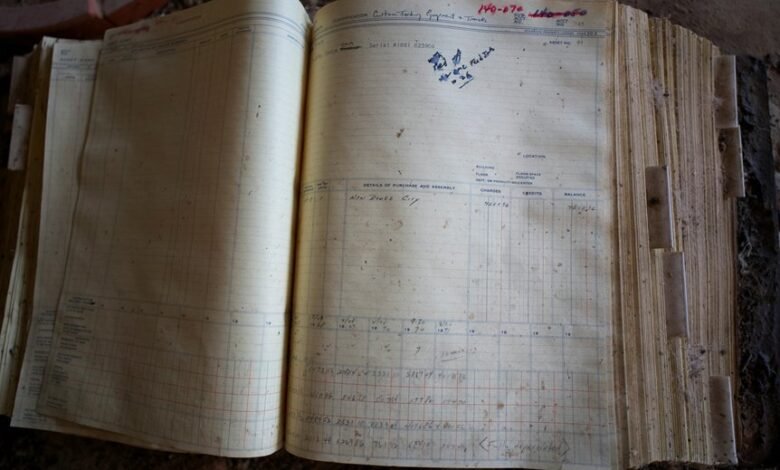
The operational data tracking archive consolidates historical and real-time records for governance, lineage, and policy enforcement. It emphasizes secure storage, role-based access, encrypted transit and at-rest protections, validated indexing, and immutable audit trails. Data capture is structured for the 10-Series workflow, supporting efficient retrieval and compliant retention. The archive enables monitoring and diagnostics, enabling informed decisions and continuous improvement, while maintaining a balance between accessibility and preservation. Questions remain about implementation specifics and ongoing enforcement.
What Is an Operational Data Tracking Archive and Why It Matters
An operational data tracking archive is a centralized repository that collects, stores, and makes accessible the historical and real-time data generated by an organization’s systems and processes.
This framework supports data governance and clarifies data lineage, enabling consistent policy enforcement, accountability, and traceability.


It balances accessibility with preservation, ensuring compliant, auditable records while enabling strategic decision-making and operational resilience.
Data Capture and Structure for the 10-Series Workflow
Data capture and structure for the 10-Series Workflow are defined to ensure consistent intake, storage, and retrieval of operational measurements. The approach emphasizes data capture, structure design, and data integrity within a metadata catalog. Access control, retrieval workflow, and monitoring metrics support diagnostic queries, improvement loops, and archival compliance, enabling precise archival retention and clear, freedom-oriented operational transparency.
Secure Storage, Access Control, and Retrieval Workflows
Secure storage, access control, and retrieval workflows are established to ensure that operational data remains protected, traceable, and readily available to authorized stakeholders.
The framework emphasizes disciplined data capture, immutable audit trails, and role-based permissions.
Cataloged procedures specify encryption at rest, secure transport, and validated indexing, enabling efficient retrieval while preserving retention requirements and compliance across the archive.
Using the Archive to Monitor, Diagnose, and Drive Continuous Improvement
Operational data within the archive is organized to support ongoing monitoring, diagnostic analysis, and systematic improvement.
The approach emphasizes data governance, risk assessment, and data lineage to ensure transparency.
Change management and anomaly detection enable timely responses, while user training reinforces disciplined use.
Insights guide continuous improvement, aligning processes with clear objectives, auditable records, and freedom to adapt responsibly.
Frequently Asked Questions
How Often Is the Archive Updated Automatically?
The archive updates on an auto update cadence, determined by system maintenance windows. It maintains predictable intervals, ensuring storage outage recovery is minimized. Data integrity is preserved through scheduled synchronization, with transparent logs detailing cadence and exceptions.
What Are the Fallback Procedures During Storage Outages?
Synchrony governs outages: fallback procedures rely on data redundancy and preserved metadata, ensuring continued access even during storage disturbances; spectrum allocation remains intact where feasible, while resilience protocols catalog, retain, and re-route data with disciplined precision.
Can Data Be Exported in Custom Formats for Analytics?
Yes, data export is supported with format customization, enabling analysts to extract datasets in preferred structures for analytics, while preserving precise metadata, lineage, and retention controls within defined archiving policies for flexible downstream use.
How Is Data Integrity Verified Post-Ingestion?
Data integrity is ensured through rigorous checksum validation and tracked data lineage. Ingestion creates verifiable fingerprints, while cataloged retention confirms provenance, enabling precise auditing, fault isolation, and freedom to trust analytics without ambiguity.
What Are the Maintenance Windows for Archive Services?
Maintenance windows are scheduled periodically; archival services pause briefly to perform updates and integrity checks. Data retention and archival policies govern timing, scope, and rollback. The approach preserves freedom while enforcing precise, catalog-like retention.
Conclusion
The archive stands as a calibrated vault, its ten identifiers humming with guarded data. Access is granted only through rigorously defined rails, every transaction logged, every change immutable. Yet beneath the orderly cataloging, a quiet signal persists—anomalies awaiting notification, gaps hinting at hidden patterns, optimizations merely potential. As monitoring deepens, stakeholders anticipate the moment when preserved traces reveal a decisive insight, tipping the balance from routine retention to transformative action. The horizon of improvement remains suspensefully unresolved.