Operational Data Tracking Archive – 9727530822, 9727643613, 9727988639, 9735219699, 9738434455, 9738697101, 9738810100, 9803437450, 9844803533, 9898634633

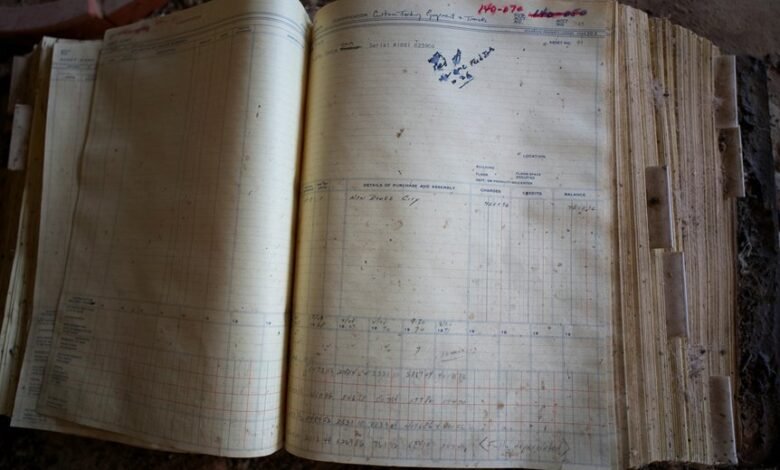
The Operational Data Tracking Archive consolidates core operational signals across ten IDs, enabling disciplined insight velocity and standardized metrics. Its structure supports governance-driven data lineage, accountability, and scalable experimentation. Core signals such as tempo, latency, and correlations are captured to inform decision-making and cross-functional collaboration. Governance, privacy, and quality controls are essential to maintain trust. Practical applications exist for turning observed patterns into targeted actions, yet critical questions remain about integration, ownership, and sustained value realization.
What Is the Operational Data Tracking Archive and Why It Matters
The Operational Data Tracking Archive is a centralized repository that systematically records, stores, and preserves operational data generated during normal business activities.
It enables disciplined insight velocity by organizing inputs for rapid analysis, trend detection, and risk assessment.


Through governance and data stewardship, the archive sustains integrity, accessibility, and standardized metrics, supporting informed decision-making while empowering teams to pursue deliberate, unconstrained improvement.
Core Signals Captured in the Archive and How They Drive Action
Are core signals the levers that translate raw data into actionable insight? The archive identifies structured signals—operational tempo, event frequency, latency, and correlation patterns—that translate input streams into measurable outcomes. They enable timely decisions and actionable signals for stakeholders. Data governance considerations frame collection, labeling, and lineage. The result is disciplined visibility, enabling freedom through clarity, repeatability, and accountable execution.
Governance, Privacy, and Quality: Keeping the Archive Trustworthy
Governance, privacy, and quality form the backbone of an archive that remains trustworthy: clear policies, rigorous controls, and verifiable stewardship ensure data integrity without compromising access.
Systematic governance addresses governance gaps, while privacy safeguards balance transparency with rights.
Quality assurance procedures verify data provenance, documenting lineage and authenticity, enabling responsible reuse and informed autonomy within a framework that honors freedom and accountability.
From Insight to Impact: Practical Ways to Leverage the Archive in Teams
From insight to impact, teams can operationalize the archive by translating data findings into actionable workflows, standardized decision-making processes, and measurable outcomes. The approach emphasizes disciplined governance, cross-functional collaboration, and repeatable methods. Practitioners identify critical metrics, align with strategic goals, and apply rapid experimentation. This framework enables practical leverage, ensures transparency, and drives sustained improvement through evidence-based, scalable actions. insight to impact.
Frequently Asked Questions
How Is Data in the Archive Actually Migrated From Sources?
Migration pipelines extract and transform sources, applying source normalization, then route data to archival storage. Data lineage and schema evolution are tracked; ingestion retries and error reporting ensure reliability, while archival access, compliance logging, and ongoing governance underpin the process.
What Are the Top 3 Failure Modes in Data Ingestion?
Top three ingestion failure modes are schema drift, missing source metadata, and throughput bottlenecks. These disrupt data quality and hinder ingestion pacing, prompting corrective governance, validation checks, and adaptive scheduling to maintain reliable, timely data flows.
Can Non-Technical Teams Access the Archive Directly?
Non technical teams can access the archive, provided the interface offers user friendly navigation and simplified views. It emphasizes accessible data, clear permissions, and guided workflows, ensuring non technical users retrieve relevant information without compromising security or integrity.
How Is Data Retention Decided for Deprecated Signals?
Data retention for deprecated signals is determined via data governance policies, applying explicit retention criteria. The process ensures priority alignment between business need, regulatory demands, and archival feasibility, while documenting rationale and scheduling for deprecation and disposal.
What Audit Trail Information Is Available to Users?
Allegorically, the archive speaks as a ledgered labyrinth. It records audit trail data with timestamps and user IDs, supporting data governance and access controls; information available includes change history, access events, and retention status, systematically disclosed.
Conclusion
The archive sequences data into structured signals, yet human judgment remains the counterpoint. Its governance enforces privacy and quality, while analytics propel rapid experimentation. Juxtaposing rigor with flexibility reveals a discipline that thrives on measurable progress and cautious curiosity. As operations harmonize with governance, teams convert raw metrics into actionable insight. In this balance, the archive not only records what happened, but guides what should happen next, reliably and transparently.