Telephone Contact Records: 8003966861, 7209122871, 854613685, 7804206881, 864-506-0379, 9052975313, 8442534631, 9136778320, 5543623514 & 7169324444

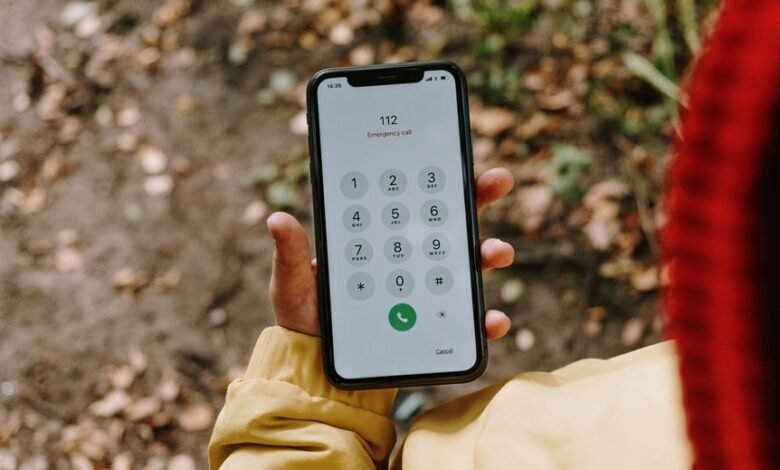
Telephone contact records such as the listed numbers illuminate how networks form around repeated communication. They reveal who connects with whom, and with what frequency, creating patterns that suggest roles and clusters. Collected and stored securely, these data support tracing activity while inviting scrutiny over privacy and governance. The implications for behavior analysis are real, yet the boundaries between insight and intrusion are delicate, demanding careful handling as the discussion progresses.
What Telephone Contact Records Reveal About Networks
Telephone contact records illuminate the structure of social and organizational networks by tracing who communicates with whom, when, and how often. They reveal network dynamics, highlighting central actors, clustering, and pathways. However, analysis must respect privacy considerations, limiting exposure to aggregate patterns rather than individual habits. Interpretations should be cautious, avoiding overgeneralization while recognizing insights and individual autonomy.
How Contact Data Is Collected and Stored Securely
Data about contacts is collected and stored using layered controls that distinguish data types, apply purpose-specific collection limits, and enforce access boundaries.


Data collection processes separate identifiers, metadata, and content, aligning with policy and legal constraints.
Secure storage employs encryption at rest and in transit, role-based access, and regular audits.
Practices emphasize accuracy, minimal retention, and transparent data lifecycle governance for secure storage.
Analyzing Call Patterns to Understand Behavior
Proceeding from the secure handling of contact data, the analysis of call patterns focuses on structured interpretation of usage signals while maintaining privacy boundaries. Analysts extract patterns to infer behavior insights without exposing individuals, emphasizing frequency, duration, and timing. Findings illuminate routine tendencies and engagement levels, enabling cautious, evidence-based conclusions about collective behavior while limiting speculative extrapolation and preserving contextual integrity. call patterns, behavior insights.
Balancing Insights With Privacy and Ethics
Balancing insights with privacy and ethics requires a careful, principle-driven approach that foregrounds data minimization, consent, and accountability.
The discussion acknowledges privacy implications while preserving analytic utility, demanding transparent methods, purpose limitation, and robust governance.
Ethical considerations center on proportionality, harm avoidance, and stewardship, ensuring researchers maintain public trust without stifling legitimate inquiry or freedom of information.
Frequently Asked Questions
Do These Records Include Voicemail Transcripts or Just Metadata?
The records, in this context, do not reveal voicemail content; they show metadata. Voicemail presence is indicated by call events, while data retention policies determine how long any related transcripts or metadata are kept.
How Long Are Numbers Retained Beyond the Study Period?
Retention duration varies by protocol, not perpetual; data handling specifies limited post-study retention, then secure disposal. In juxtaposition, brief logs fade like footprints while archival records stand as safeguards, ensuring lawful access without undue retention.
Can Users Opt Out of Having Their Data Recorded?
Yes, users may opt out of having their data recorded. The system emphasizes opt out options and data minimization, ensuring participants retain control while safeguarding privacy; this approach supports informed choice and minimizes unnecessary data collection.
What Specific Legal Standards Govern Data Sharing With Third Parties?
Data sharing with third parties is governed by applicable privacy laws, contract terms, and consent frameworks. In terms of data governance and privacy compliance, transparency, purpose limitation, security standards, and auditability shape lawful disclosures while preserving user autonomy.
How Are False Positives in Contact Networks Identified and Corrected?
False positives in contact networks are identified by cross-checking with independent data sources and applying statistical thresholds; data correction follows, updating records to reflect validated interactions while preserving audit trails and ensuring analytical integrity for stakeholders seeking freedom.
Conclusion
In drawing lines among numbers, the article notes how contact records sketch network lattices with quiet precision. Each call a twig in a sprawling tree, connections appear and fade, revealing hubs, clusters, and routes without naming lives in full. The conclusion urges careful stewardship: extract patterns, not identities; preserve privacy, minimize data, and secure storage. Taken as a whole, the picture is a delicate map—informative yet restrained, insightful without overreach, like footprints in safe, guarded sand.